
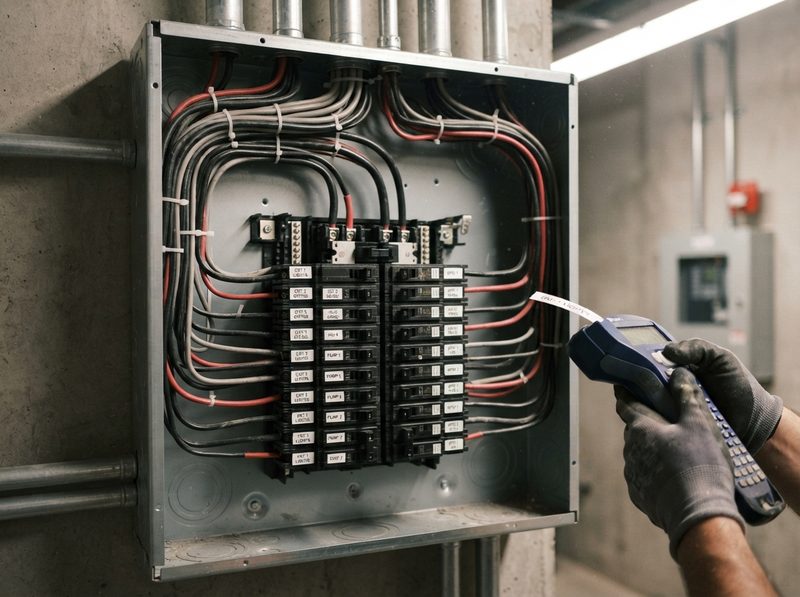
Electrical fires rarely start without warning. The signs are often there beforehand, but they get dismissed as minor annoyances rather than recognized as symptoms of a real problem. Knowing what to look for, and when to stop investigating it yourself and call an electrician, matters for both homeowners and commercial building owners.
What you should never do
Before the list of warning signs, one rule: if you suspect an electrical problem, do not open a panel, touch wiring, or attempt any live electrical work yourself. Electrical fires and shocks happen fast, and diagnosing the cause safely requires the panel de-energized and tested by someone trained to do it. Your job is to notice the signs and get an electrician on site, not to fix the problem.
Warning signs to take seriously
- A burning smell with no obvious source. A faint, warm, plastic-like odour near an outlet, switch or panel is a common early sign of overheating insulation.
- Discoloured or warm outlet covers and switch plates. Cover plates should not feel warm to the touch or show scorch marks or browning.
- Buzzing or crackling sounds from outlets, switches or the panel itself. Electrical components should be silent.
- Frequent breaker trips, especially on a circuit that did not used to trip, or one that trips as soon as it is reset.
- Flickering or dimming lights that are not tied to an obvious cause like a storm, particularly if it happens when a specific appliance runs.
- Sparking from an outlet or switch when plugging something in, beyond the small, brief spark that can be normal.
- Discoloured or melted plastic on cords, outlets or plugs.
- A persistent burning smell from the electrical panel itself, or visible scorching around breakers.
Any one of these on its own is worth a call. More than one, or anything paired with a visible burning smell, is worth treating as urgent.
Why these signs get ignored
Most of these symptoms are intermittent. A buzzing outlet might go quiet for weeks. A breaker that trips once might not trip again for a while. That inconsistency is exactly what makes electrical problems dangerous: the absence of a repeat occurrence is not the same as the problem resolving itself. Heat damage inside a wall or panel accumulates whether or not it produces a visible symptom every day.
What raises the risk in older buildings
Older wiring systems, aluminum branch circuit wiring from certain eras, overloaded circuits from add-on appliances never accounted for in the original design, and panels that have not been inspected in years all raise the odds that a minor symptom reflects a real underlying fault. If you own or manage an older home or commercial building and cannot recall the last time the electrical system was inspected, that gap is itself a reason to schedule one.
What to do right now if you notice a sign
- Stop using the affected outlet, switch or circuit immediately.
- If you smell burning or see visible scorching, shut off power to that circuit at the panel if you can do so safely, and call an electrician the same day.
- If the smell is strong, you see active sparking, or you are not confident identifying the source, leave the area and call for emergency service.
- Do not wait for a scheduled maintenance visit to report an active warning sign.
Keep working smoke alarms in place
None of these warning signs matter if there is nothing in the building to catch an actual fire early. Test smoke alarms on the schedule recommended by the manufacturer, replace batteries promptly, and replace the units themselves once they reach the end of their rated service life, which is printed on the unit itself. In a commercial building, this is often tied into a monitored fire alarm system that should be tested and serviced on a schedule set by your local fire code requirements. Warning signs of an electrical problem and working smoke detection are two separate layers of protection, and relying on one instead of the other leaves a gap that does not need to exist.
Talk to Puffin Power
If you have noticed any of these warning signs in a home or commercial building, do not wait on it. Puffin Power offers emergency electrical service across the region. Call (709) 769-9713 or reach out through /contact.html.
Published 2026-09-23 · About 3 minute read