
If you are a commercial property manager in downtown Sydney, a contractor bidding work tied to the harbour lands, or a homeowner in Whitney Pier or one of Sydney's older neighbourhoods, your electrical questions come from two things most of Nova Scotia does not deal with together: a genuinely rough winter climate off the Cabot Strait, and a built environment still shaped by a century of heavy industry. Neither is a reason to overbuild for its own sake. Both are reasons to plan carefully rather than default to whatever the last contractor did.
A different kind of weather exposure
Sydney sits on the Atlantic side of Cape Breton Island. Average snowfall runs well over two and a half metres a season, among the heaviest anywhere in the country outside coastal British Columbia, and the region regularly sees storm warnings with sustained winds strong enough to ground ferry crossings on the Cabot Strait. That is a heavier load than most electrical equipment specifications assume by default.
For outdoor or rooftop equipment, that means enclosures and hardware rated for real snow load and wind, not the minimum a spec sheet allows. Salt air off the harbour adds a second, slower problem: corrosion that keeps working on exposed metal long after a storm passes. Panels, disconnects, and anything mounted at grade or on a roof near the water need corrosion-resistant components and proper sealing from installation, not as a repair afterward. That is the kind of detail that gets specified correctly when electrical is planned alongside the rest of a build, and it applies with extra weight here.
An industrial legacy still shaping the ground
Sydney's electrical planning does not happen on a blank site. The city grew up around the Sydney Steel Corporation plant and the coke ovens that fed it, and the surrounding tar ponds became one of the most contaminated industrial sites in the country before a roughly $400 million federal-provincial cleanup solidified and capped the waste, finishing in 2013 with the site reopened as Open Hearth Park. That history matters for anyone doing underground work near the old plant footprint or Whitney Pier: soil conditions and buried infrastructure from a century of industrial use deserve real site history checks, not assumptions.
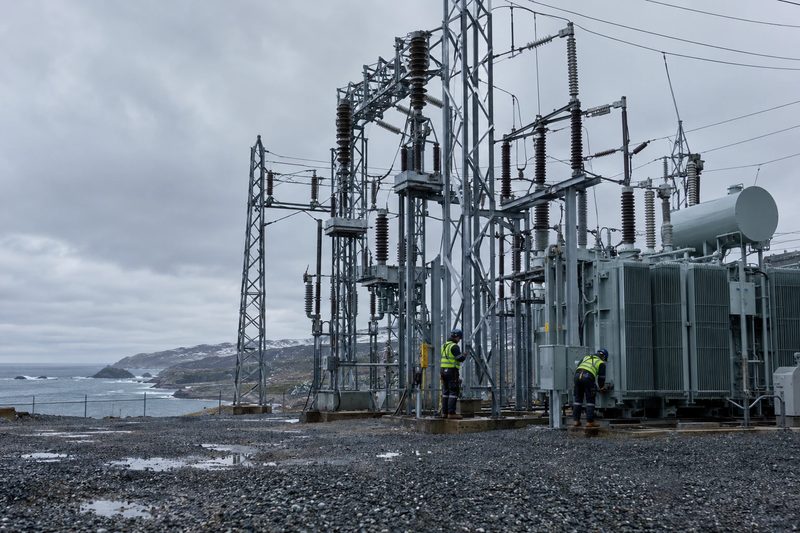
The same industrial waterfront is where Sydney's next chapter is being written. Harbour lands near the Sydport industrial park have been the subject of a long-running port development proposal, and as of this month the group behind it says it is shifting its near-term focus toward supporting offshore wind development rather than a container terminal. Whichever direction that project takes, it points at the kind of electrical infrastructure Sydney's harbour lands will likely need over the next decade: substation and switchgear capacity, engineered to scale with a project's phasing. That work, backed by stamped drawings from a partner professional engineer where that sign-off is required, is the scope Puffin Power's low and high voltage work is built around.
Commercial work
For property managers and contractors downtown or along the harbour, the practical questions are usually about capacity and resilience: whether existing service is adequate for a tenant fit-out, whether aging switchgear needs replacing before it becomes the constraint on a lease deal, and what happens to critical loads during an outage in a place where outages are a normal part of winter. Emergency response and standby power both belong in that planning conversation before the storm arrives, not after.
EV charging is also worth planning early rather than retrofitting later, particularly for any commercial or mixed-use project tied to the harbour redevelopment conversation. Sizing the electrical room for future charger circuits during initial construction costs far less than trenching it in afterward. See EV charging for how that gets scoped.
Residential work
A lot of housing stock in Sydney and the surrounding Cape Breton Regional Municipality predates central air, EV ownership, and today's kitchen and heating loads. Adding a heat pump, an EV charger, or a backup generator to an older panel is one of the most common reasons a homeowner ends up needing an electrician rather than just an installer. Watch for warning signs: a fuse box or an original service from before the 1980s, breakers that trip under normal loads, or an installer flagging the panel before proceeding. Any of those calls for a proper assessment, not a workaround, and not something to diagnose or fix yourself. Puffin Power's residential work covers panel upgrades, and as an authorized Generac dealer, backup power is a natural part of that conversation where a hard winter storm reliably means lost power for some stretch of the community.
Code and inspection
Electrical work in Sydney and the rest of Nova Scotia is governed by the province's Electrical Installation and Inspection Act, with wiring permits and inspections coordinated through Nova Scotia Power, the utility serving the area. All work still has to meet the Canadian Electrical Code regardless of who inspects it. If you are unsure whether your project needs a permit, ask your provincial electrical inspection authority before work starts.
Puffin Power is licensed in Newfoundland and Labrador and serves Sydney and the rest of Cape Breton from its base in Conception Bay South. Nova Scotia licensing for a specific scope should never be assumed either way. Ask when you reach out, and you will get a straight answer for your project.
Talk to Puffin Power
If you have a project in Sydney, from a harbourfront infrastructure scope to a home generator install, reach out through contact.html or call (709) 769-9713. Ask about scheduling, and Puffin Power will work through what your project actually needs before either of you commits to anything.
Published 2026-09-23 · About 4 minute read