
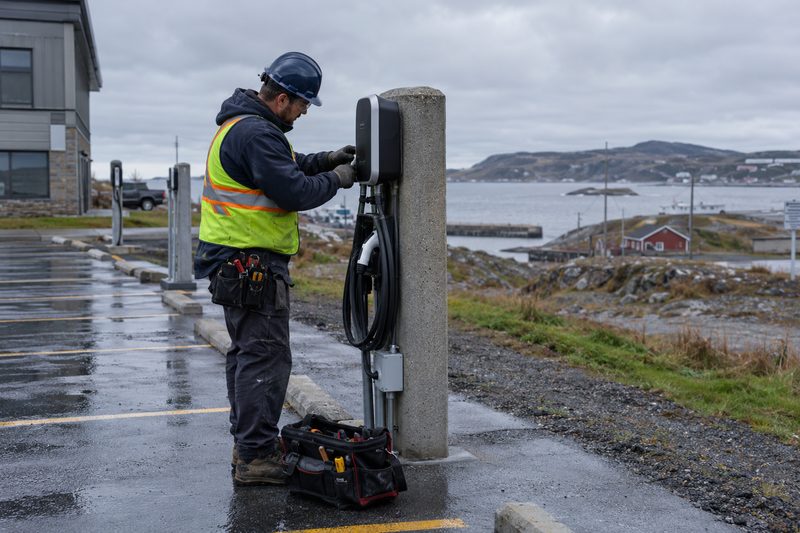
Homeowners buying an electric or plug-in hybrid vehicle usually want a home charger installed before the vehicle arrives, not weeks after. Knowing the steps ahead of time makes the process shorter and avoids surprises on install day.
Level 1 versus Level 2, briefly
Every electric vehicle comes with a cord that plugs into a standard household outlet, known as Level 1 charging. It works, but it is slow, often adding only a small amount of range overnight. Most homeowners who charge at home want a Level 2 charger, which runs on a 240 volt circuit similar to an electric dryer or stove, and charges considerably faster. This guide is about Level 2 installation, since that is what most homeowners are asking for.
The panel check comes first
Before quoting an installation, an electrician needs to see your electrical panel. The two questions that matter are whether the panel has an open slot for a new double-pole breaker, and whether the panel's total capacity can support the added load along with everything else in the house. Older homes with 100 amp service sometimes need a panel upgrade to add a Level 2 charger alongside existing loads like electric heat or a hot tub. This is the single biggest variable in project cost and timeline, so it is worth having it checked before you commit to a charger model or an installation date.
Where the charger goes
Most homeowners want the charger in a garage or on an exterior wall near where the vehicle parks. Consider:
- Distance from the panel, since a longer cable run costs more.
- Whether the run goes through finished space, which affects both cost and how much patching is needed afterward.
- Outdoor exposure, since an exterior-mounted charger needs to be rated for outdoor use and properly protected from weather.
- Cable length from the charger to where the vehicle actually parks, including room to manoeuvre.
Permits and inspection
A new 240 volt circuit for an EV charger requires a permit and inspection under the Canadian Electrical Code, the same as any other new circuit. A licensed electrician handles this as part of the job. If a contractor offers to install a home charger without pulling a permit, that is a reason to ask questions, not a shortcut worth taking. Uninspected work can complicate a home sale or an insurance claim later.
What installation day looks like
- The electrician confirms the panel has capacity and identifies the breaker location.
- Cable is run from the panel to the charger location, either through accessible space or by opening a controlled section of wall.
- The charger is mounted, wired and tested.
- Any wall openings from the cable run are patched, though homeowners sometimes handle final paint touch-up themselves.
- The work is scheduled for inspection per your provincial process.
Most straightforward installations, where the panel already has capacity and the run is short, are completed in a single day. Longer runs, panel upgrades, or finished-wall routing add time.
Choosing a charger
Chargers vary by amperage, smart features like app connectivity and scheduling, and whether they are hardwired or plug into a receptacle. An electrician can advise on what your panel supports and what fits your vehicle's charging capability, since a charger rated higher than your vehicle can use does not charge any faster. If you plan to add a second EV in the future, mention that during the panel check, since it affects whether to plan for a second circuit now.
Living with the charger afterward
Once the charger is installed, most homeowners simply plug in and forget about it, but a couple of habits help it last. Keep the connector and cable off the ground when not in use, since repeated dragging across a garage floor or driveway shortens cable life faster than normal use. If the charger has a companion app, check occasionally for firmware updates, since manufacturers periodically improve charging behaviour and add features after release. If you ever notice the charger tripping a breaker, warming noticeably at the plug or connector, or displaying a persistent fault code, treat that as a reason to call an electrician rather than resetting it repeatedly and hoping the issue clears on its own.
Talk to Puffin Power
Puffin Power installs home EV chargers across Newfoundland and Labrador, starting with a panel capacity check and carrying through to permit and inspection. Contact us to book an assessment, or learn more on our EV charging services page.
Published 2026-09-23 · About 3 minute read