
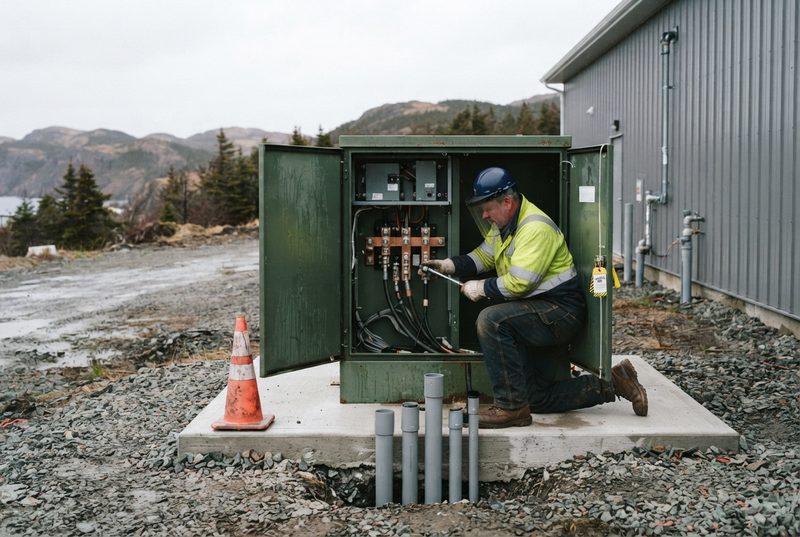
If your development includes underground electrical service, a padmount transformer is likely part of the design. Knowing what it does and what it needs from the site early avoids delays that show up much later, often at exactly the point when a project cannot easily absorb them.
What a padmount transformer does
A padmount transformer steps voltage down from the primary distribution level to the lower voltage used inside buildings, similar to the pole-mounted transformers seen on overhead systems, but enclosed in a locked, ground-level cabinet designed for underground service. It sits on a concrete pad, connects to underground primary cable on one side and secondary service to the building on the other, and is typically owned and maintained by the utility even though it sits on private property.
Why site planning has to account for it early
A padmount transformer is not a small piece of equipment tucked into a corner without consequence. It needs:
- Clearance space on all sides for utility access and safety, with specific setback requirements from buildings, other equipment, and combustible materials that vary by utility.
- Vehicle access for the utility to service or replace it, which affects where it can sit relative to parking, landscaping or fencing.
- Coordination with grading and landscaping, since it has to be set at the correct elevation before those trades finish their work.
- Placement decided early enough to inform the underground duct bank and conduit routing that feeds it, rather than being squeezed in after those paths are already set.
Missing any of these tends to surface during utility review of the site plan, which can mean a redesign after other elements are already committed.
Coordinating with the utility
Because the utility typically owns and maintains the transformer even on private land, its placement, pad specifications and clearance requirements usually need utility approval as part of the site plan. This approval process takes time, and starting it late is one of the more common ways an otherwise on-schedule project loses weeks waiting on a response.
Aesthetics and screening
Padmount transformers are not attractive, and developers reasonably want to screen them from view. Screening is possible, but it has to respect the utility's clearance and access requirements. A fence or landscaping placed too close, or on the wrong side, can trigger a required rework once the utility inspects the installation. Get the utility's screening guidelines before finalizing landscape design, not after it is installed.
What to ask before finalizing a site plan
- What clearance and setback distances does the utility require around the transformer.
- Where does the primary feed need to enter, and where does secondary service need to exit toward the building.
- What are the utility's rules for screening or fencing, if any.
- How far in advance does the utility need to review and approve the pad location.
These questions fit naturally into a design-build process where the electrical contractor is coordinating utility requirements alongside underground infrastructure work rather than reacting to them after the fact.
Timeline considerations
Utility review and approval of a padmount transformer location, along with any required upgrades to serve the site, can take considerably longer than the construction schedule assumes if it is not started early. Submitting the site plan for utility review as soon as the general building layout is set, rather than waiting until drawings are fully finalized, gives the utility more time to respond and gives the project more room to adjust if the utility requests changes to the proposed location. On a project with a tight construction schedule, this coordination is often the long pole in the schedule for getting service connected on time, more so than the electrical work happening on the building itself.
Talk to Puffin Power
If your project needs padmount transformer coordination as part of a larger electrical scope, Puffin Power can help plan it into the site early. Call (709) 769-9713 or contact us through /contact.html.
Published 2026-09-23 · About 3 minute read