
Calling an electrician for an urgent problem is not something most people do often, so it helps to know what actually happens once you make that call, from a homeowner dealing with a scary noise from the panel to a property manager whose building just lost power.
What to have ready when you call
Whoever answers is going to need a few basics to figure out what is happening and how quickly it needs a response:
- What you are seeing, hearing or smelling, and where.
- Whether the problem affects the whole building, part of it, or a single circuit.
- Whether anyone is in immediate danger or whether it looks like a fire risk.
- Your address and a reliable way to reach you.
- For a commercial building, whether critical systems, like refrigeration, security or life safety equipment, are affected.
The more specific you can be, the faster the right response gets dispatched, and the more the electrician can prepare before arriving.
How the call gets triaged
Not every emergency call is the same kind of emergency. A visible spark, a burning smell, or exposed wiring gets treated differently than a tripped breaker that will not reset or a generator that failed to start. Whoever takes the call should be asking questions to understand severity, not just logging an address. If there is any sign of active fire risk, that call should also go to the fire department, not just an electrician.
What happens on arrival
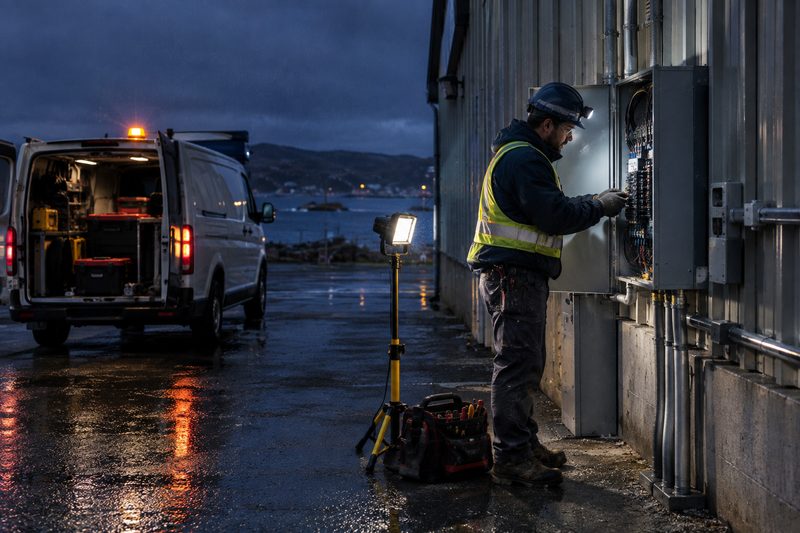
Once the electrician arrives, the first step is usually to make the situation safe, which might mean isolating a circuit or a section of the panel before anything else happens. Diagnosis follows: tracing the actual source of the problem rather than just addressing the symptom you called about. A tripped breaker, for example, might be protecting you from a much larger fault, and simply resetting it without finding the cause can put you right back where you started, or worse.
Temporary fixes versus full repairs
Depending on what is found, the electrician might do one of a few things:
- Complete the repair on the spot if parts and access allow it.
- Make the situation safe with a temporary measure, such as isolating a damaged circuit, and schedule the full repair for a follow-up visit.
- Identify that the issue is on the utility side of the meter and direct you to report it to your utility.
Being told a fix is temporary is not a sign of a bad job. Some repairs need parts that are not carried on a service vehicle, or involve extra work more suited to daylight with a full crew.
What you should expect afterward
A proper emergency call ends with an explanation of what was found, what was done, and what if anything still needs follow-up. For a commercial building, this should be documented for your records and for insurance purposes if the incident involved damage. If a temporary fix was put in place, get a clear timeline for the permanent repair rather than assuming it will happen on its own.
What determines response time
How quickly an electrician can respond depends on a few things outside anyone's direct control: how many other emergency calls are already in progress, the distance from the nearest available technician, and current weather or road conditions, which in this region can add real delay during a storm. A dispatcher who gives you an honest estimate rather than a vague reassurance is doing you a favour, since it lets you make decisions, such as whether to evacuate a space or shut down equipment, based on how long you are actually likely to be waiting. If your situation changes while you are waiting, such as the smell getting stronger or new symptoms appearing, call back and update the information rather than assuming the original call covered it.
Talk to Puffin Power
Puffin Power provides emergency electrical service for homes and commercial buildings across the region, with the same attention to finding the actual cause rather than a quick patch. Learn more about the company or call (709) 769-9713. To reach us directly, visit /contact.html.
Published 2026-09-23 · About 3 minute read