
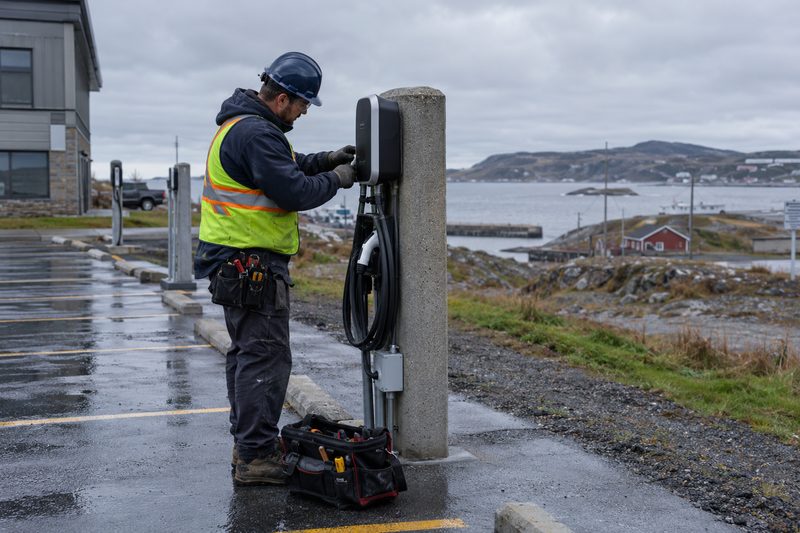
Property managers and condo boards fielding requests for EV charging face a different problem than a single homeowner. One resident's charger is simple. Planning for a building where charging demand will keep growing is not, and getting the electrical infrastructure right the first time avoids repeated, disruptive work later.
Why this is not just "install a charger"
A single-family home has one panel and one electrical account. A multi-unit building has shared electrical infrastructure, individual unit meters or a common building meter, and residents who may want chargers installed at different times over several years. Treating each charger request as a one-off installation tends to run out of capacity or parking allocation faster than expected, and it can mean redoing infrastructure work that could have been planned once, properly, from the start.
The core planning questions
Before installing anything, a building's ownership or management should get answers to a few questions from an electrical contractor:
- How much spare capacity exists in the building's electrical service, and how much would a meaningful number of chargers use over time.
- Whether chargers will be billed to individual units or split by the building, since this affects whether a submetering approach is needed.
- Which parking spaces are realistically served by the building's electrical rooms without excessive cable runs or underground work.
- Whether a load management system makes sense now, so future chargers can share available capacity rather than requiring a service upgrade every time.
Infrastructure first, chargers second
The most cost-effective approach for a multi-unit building is to install the underlying infrastructure, conduit, panels and capacity, for the full number of parking spaces likely to want chargers eventually, even if only a handful of chargers are installed initially. Adding conduit and capacity once, while parking areas are already opened up for the work, costs far less than trenching and opening walls again for every new resident request. This is a case where planning ahead genuinely saves money rather than being an abstract recommendation.
Billing and access
Buildings differ in how they want to handle electricity costs for EV charging. Some install networked chargers that track usage per unit and bill through the condo fees or a separate account. Others assign a charger to a unit's own electrical meter directly. The right choice depends on the building's existing metering setup and governance structure, and it is worth deciding this before infrastructure is installed, since it affects panel and metering design.
Funding to ask about
Some federal and provincial programs support EV charging infrastructure in multi-unit residential buildings, including Natural Resources Canada's Zero Emission Vehicle Infrastructure Program, which has funded charger deployment at multi-unit buildings, workplaces and for fleets. Program terms, funding levels and eligibility change over time, so confirm current details directly with Natural Resources Canada or your provincial energy office rather than relying on what a neighbouring building did a year or two ago.
What to bring to an electrical contractor
- A parking plan showing which spaces are candidates for charging now and in the future.
- Recent utility bills or service information, so the contractor can assess existing capacity.
- Any governance decisions already made about billing and access.
- A rough sense of timeline, since phased installations are common and worth planning for from the first phase.
Communicating with residents
Boards and property managers sometimes underestimate how much resident communication a phased rollout needs. Residents who requested a charger early want a clear answer on timeline. Residents who have not asked yet want to know whether the building's plan will accommodate them eventually, and on what basis spaces get allocated as demand grows, whether that is first-come, a waitlist, or tied to specific parking assignments. Settling that policy alongside the electrical plan, rather than after the first few chargers are already installed, avoids disputes that have nothing to do with the wiring itself but can slow a project down just as effectively.
Talk to Puffin Power
Puffin Power plans and installs EV charging infrastructure for multi-unit residential buildings across Atlantic Canada, sized for where a building is headed, not just its first request. Contact us to start a site assessment, or see our EV charging services.
Published 2026-09-23 · About 3 minute read