
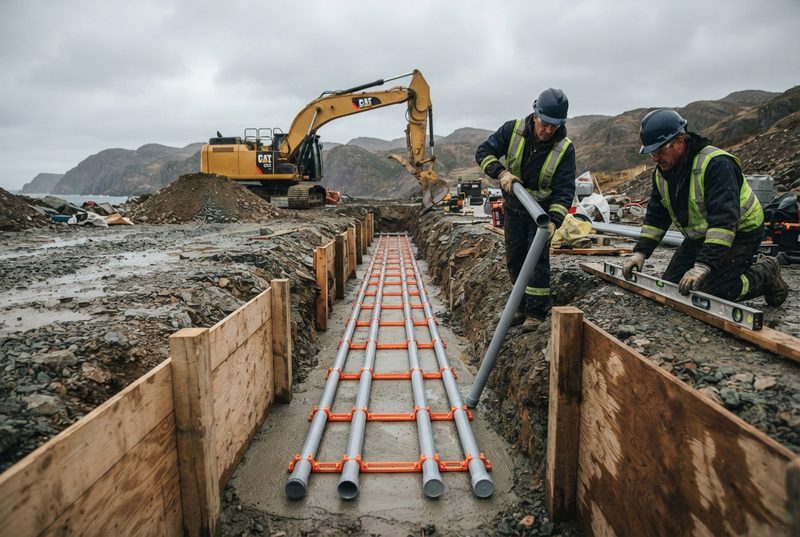
Underground electrical work anywhere involves the same basic elements: trenching, conduit, backfill, and getting cable from one point to another below grade. On the Atlantic coast, three things complicate that in ways worth planning for before the trench is opened: frost, rock, and salt exposure.
Frost depth
Ground freezes in winter, and how deep that frost line goes affects how deep conduit and cable need to be buried to avoid frost heave, which can shift, crack or stress buried infrastructure over repeated freeze-thaw cycles. Frost depth varies by location and by winter, and the local requirement is typically set by the provincial electrical inspection authority or the applicable code and standards for the area, not by a single fixed number used everywhere. Burying too shallow to save on excavation cost is the kind of shortcut that shows up as a problem years later, not immediately.
Bedrock
A lot of the region sits on shallow bedrock, sometimes inches below the surface, sometimes deeper but still within reach of a standard trenching operation. Rock changes the entire scope of an underground installation:
- Standard trenching equipment may not be enough, requiring rock saws, hammering attachments, or blasting in extreme cases, all of which affect cost and schedule.
- Achieving required burial depth over rock sometimes means a different approach, such as encasement or above-grade routing options in specific short sections, where code allows it.
- Rock conditions are not always visible from the surface, which is why geotechnical information or at least a careful site assessment before finalizing routing is worth the time. Guessing at subsurface conditions on a project with significant underground scope tends to get expensive.
Salt exposure
Coastal properties, and inland properties that get de-icing salt from roads and parking areas, expose buried and above-grade electrical equipment to corrosive conditions that inland, non-coastal projects do not deal with to the same degree. This affects material choices:
- Equipment enclosures, hardware and connectors rated for corrosive environments hold up better near salt exposure than standard-grade equipment.
- Padmount transformers, switchgear enclosures and other equipment sited close to the coast or to heavily salted roadways benefit from material and coating choices suited to that exposure.
- Grounding system components below grade are also subject to corrosion over time in these conditions, which is a reason periodic inspection matters more here than it might inland.
Why this affects planning, not just installation
None of this is unusual or a reason to avoid underground electrical work on the coast. It is common practice for the region. But it does mean routing, depth, material selection and equipment specification need to account for local conditions from the start of design, rather than being adjusted mid-installation once a crew hits rock or finds the frost line deeper than assumed. That kind of change mid-project tends to cost more than planning for it upfront.
What to raise early with your contractor
- Has the site's frost depth and any known rock conditions been factored into the routing and burial depth.
- Are enclosures and hardware specified for the site's actual exposure, coastal or otherwise, not a generic default.
- Is there a contingency in the schedule and budget for unexpected rock, which is common enough on this coast to plan for rather than treat as a surprise.
Seasonal timing of the work
Frozen ground also affects when underground work can reasonably happen. Excavating through frost adds cost and time compared to working in unfrozen ground, and some approaches used to ease excavation in warmer months are not practical once the ground has frozen solid. Scheduling underground electrical work for a window before the ground freezes, where the overall project timeline allows it, is often more efficient than pushing through frozen conditions out of necessity. Where winter work cannot be avoided, budgeting for the added time and equipment needed to excavate through frost keeps the schedule realistic rather than optimistic.
Talk to Puffin Power
Puffin Power designs and installs underground infrastructure across Atlantic Canada with these coastal conditions factored in from the start. Call (709) 769-9713 or reach out through /contact.html.
Published 2026-09-23 · About 3 minute read