
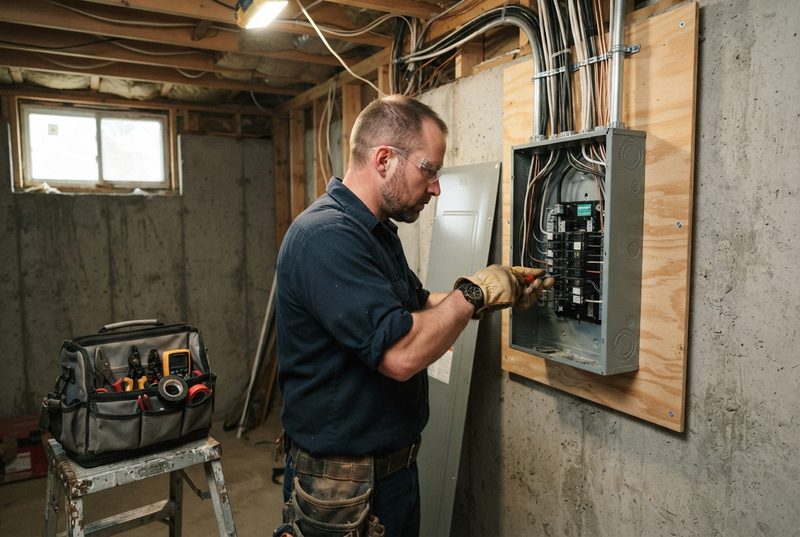
Homeowners buying or renovating an older home in Atlantic Canada eventually run into one of two wiring types that raise questions with insurers, inspectors and electricians alike: knob-and-tube wiring and aluminum branch circuit wiring. Neither one means the house is unsafe by default, but both need a clear-eyed assessment rather than being ignored or, at the other extreme, assumed to require a full rewire.
What knob-and-tube wiring is
Knob-and-tube is an older wiring method using individual insulated conductors run through porcelain knobs and tubes, common in homes built in the earlier part of the twentieth century. The wiring itself, when undamaged and unmodified, was not inherently unsafe by the standards of its time. The problems that show up today usually come from age, from insulation that has become brittle, from previous modifications that were not done to code, or from the wiring being covered with modern insulation it was never designed to have around it, which can trap heat.
What aluminum wiring is
Aluminum branch circuit wiring was used in many homes from the mid-1960s through the late 1970s, largely because of the cost of copper at the time. Aluminum conducts electricity fine, but it behaves differently than copper at connection points: it expands and contracts more with temperature changes, and it oxidizes when exposed to air, which can create a high-resistance connection that generates heat at outlets, switches and panel terminations over time.
Why insurers and inspectors flag both
Insurers ask about knob-and-tube and aluminum wiring because both have a documented history of connection and insulation related fire risk when left unaddressed, not because the wiring type itself is automatically dangerous. Some insurers decline to cover a home with active knob-and-tube wiring, or require an inspection and remediation first. Ask your insurer directly what they require, since policies and requirements vary.
What an assessment actually looks at
An electrician assessing either wiring type in an older home checks:
- Whether the wiring is still in active use, or was already replaced in some areas during past renovations.
- The condition of the insulation and connections, not just the presence of the wiring type.
- Whether any of it has been covered with insulation or modified in ways that increase heat retention or risk.
- Which devices, outlets, switches, and fixtures, are connected to it.
Remediation options for aluminum wiring
Full replacement of aluminum wiring is one option, but it is not the only one. Pigtailing, connecting a short length of copper wire to the existing aluminum conductor using connectors specifically rated for aluminum-to-copper connections, is a recognized remediation method when done correctly. Standard wire nuts are not adequate for this connection. This work should be done by a licensed electrician using approved connectors, not treated as a simple do-it-yourself fix.
What homeowners should not do
Do not attempt to assess, repair, or work around either wiring type yourself. The risks with both types are concentrated at connection points and inside walls, which are not places to guess. If you notice warm outlet covers, flickering lights tied to specific circuits, or a burning smell near outlets or the panel, stop using that circuit and contact emergency service if the smell or heat continues.
Financing and renovation timing
If a renovation is already planned in a room with either wiring type, that is often the most cost-effective time to address it, since walls are already open and the incremental cost of remediation is lower than opening the same wall again later. Ask your contractor to flag any exposed knob-and-tube or aluminum wiring encountered during unrelated renovation work, rather than closing the wall back up around it.
Planning around an older home purchase
If you are buying a home built before the 1980s, ask specifically about wiring type during the home inspection, and budget for an electrical assessment as part of your due diligence rather than discovering the wiring type after closing.
Puffin Power assesses knob-and-tube and aluminum wiring in residential properties across Atlantic Canada and provides remediation options suited to the specific home, not a default full rewire recommendation.
Talk to Puffin Power
If you own or are considering an older home and want its wiring assessed, contact Puffin Power or call (709) 769-9713.
Published 2026-09-23 · About 3 minute read