
Homeowners in Newfoundland and Labrador live with wind, freezing rain and power outages as a normal part of the year. A home's electrical system can be made more resilient to that without a full rebuild, but it takes some planning before the storm season, not during it.
Know what actually fails
Storm damage to a home's electrical system usually comes from one of a few sources: wind bringing down a tree limb or the service line itself, water intrusion around the meter base or service entrance, voltage surges from lightning or from the utility grid recovering after an outage, and prolonged outages that leave sump pumps, freezers and heating systems without power. Each of these has a different fix, so it helps to know which risk you are actually addressing.
Check the service entrance
The point where power enters your home, the weatherhead, meter base and service entrance cable, takes the most weather exposure of any electrical component on the property. Look for:
- A weatherhead that is properly sealed and angled to shed water, not collect it.
- A meter base that is not cracked, loose or showing rust staining.
- Service entrance cable that is not rubbing against a tree branch or roofline.
- Proper clearance between the service drop and anything that could fall on it in high wind.
None of this requires an electrician to spot from the ground, but repairs to the service entrance do require one, since this is live utility-side equipment.
Surge protection
A whole-house surge protective device, installed at the panel, absorbs voltage spikes before they reach appliances, electronics and HVAC equipment. It will not stop a direct lightning strike, but it does protect against the more common surges that come from grid switching and nearby strikes. If your home does not have one, it is a relatively small addition to make during any panel work, and it runs alongside standard point-of-use surge protectors rather than replacing them.
Plan for outages, not just damage
Storm-proofing is not only about preventing damage. It is also about what happens when the power goes out anyway, which in this region it will.
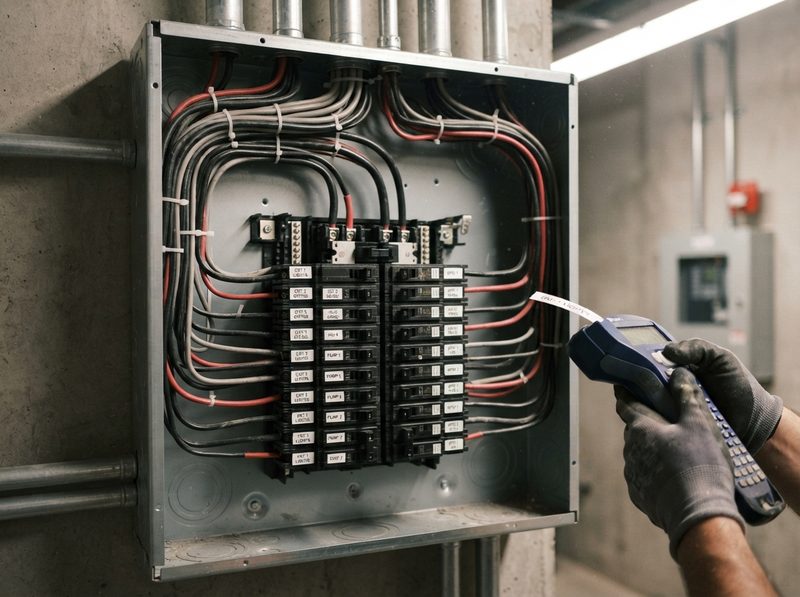
- Know where your electrical panel is and how to identify circuits by more than a vague label.
- If you rely on a sump pump, well pump or medical equipment, talk to an electrician about backup power options before you need one in the dark.
- Keep flashlights and a battery radio somewhere you can find them without power, not in a drawer you have not opened in a year.
- If you smell burning or see scorch marks after power is restored, do not simply reset the breaker. Call an electrician.
After the storm
When power comes back after an outage, it sometimes comes back with a voltage surge or as an uneven restoration across phases. If lights flicker unusually, breakers trip repeatedly, or you notice a burning smell, treat that as a signal to have the system checked rather than something to wait out. Water intrusion from a storm can also affect wiring in ways that are not visible until it causes a fault later, particularly around basement outlets or exterior fixtures that took on water.
Where backup power fits
For homeowners who lose power often enough that it affects daily life, whether from well pumps, home offices or medical needs, a standby generator connected through a properly installed transfer switch is worth considering separately from storm-proofing the existing system. The two projects work well together, since panel work for a generator connection is a natural time to add surge protection as well.
Talk to Puffin Power
Puffin Power helps homeowners across Newfoundland and Labrador prepare their electrical systems for storm season, from service entrance checks to surge protection and backup power planning. Contact us to talk through your home, or see our residential services for more.
Published 2026-09-23 · About 3 minute read