
Homeowners with a home full of electronics, from a heat pump to a home theatre to networked appliances, have more to lose from a power surge than they did a decade ago. Whole-house surge protection is a modest addition to a panel that addresses a risk most people do not think about until something gets damaged.
What a power surge actually is
A surge is a brief spike in voltage above what your home's electrical system is designed to carry. Surges come from a few sources: lightning strikes, either direct or nearby, utility grid switching, especially as power is restored after an outage, and even large appliances in your own home cycling on and off, such as a well pump or air conditioner motor. Most surges are small and pass unnoticed. Larger ones can shorten the life of electronics or damage them outright.
Point-of-use versus whole-house protection
Many homeowners already use point-of-use surge protectors, the power bars sold with a surge rating for a computer or television. Those help for the devices plugged into them, but they do nothing for a furnace control board, a heat pump, kitchen appliances or anything hardwired. A whole-house surge protective device is installed at the electrical panel and protects everything downstream of it, including hardwired equipment that a power bar cannot reach. The two are complementary. A whole-house device handles the bulk of a surge, and sensitive point-of-use protectors add a second layer for particularly valuable electronics.
What it does not do
A whole-house surge protector will not stop a direct lightning strike from causing damage, and it is not a substitute for unplugging sensitive equipment during a severe electrical storm if you are especially concerned. It also does not eliminate the value of point-of-use protection for computers and entertainment equipment. Think of it as reducing the frequency and severity of surge damage across the whole house, not as a guarantee against every possible event.
Signs it might be worth adding
Some homes are more exposed to surge risk than others.
- Frequent power outages or flickering in the area, which often means more grid switching events.
- A home with a heat pump, since the outdoor and indoor units both have electronic controls that are costly to replace.
- A recent history of appliance or electronics failures that seemed to follow a storm or an outage.
- Rural or elevated properties with longer overhead service runs, which are more exposed to lightning-related surges.
If any of these describe your situation, it is worth asking an electrician to look at your panel and discuss adding protection.
Installation is straightforward
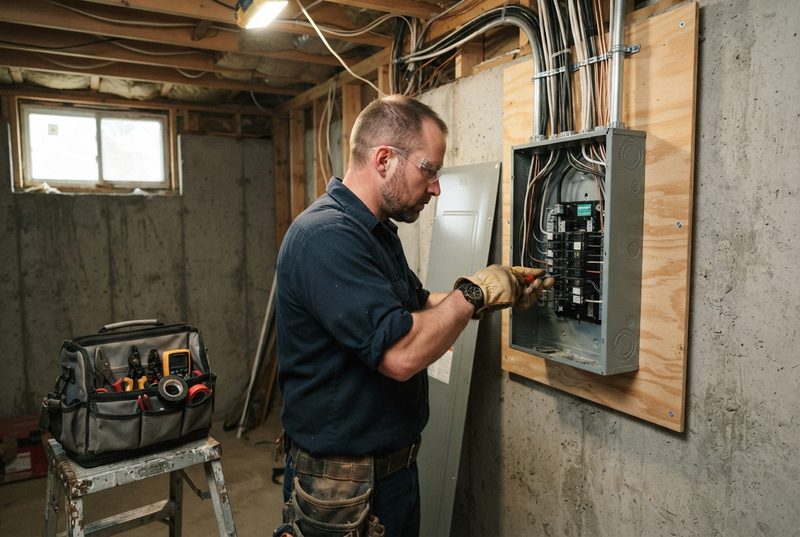
A whole-house surge protective device is typically installed inside or adjacent to your main panel and connects to a breaker. For most homes, this is a short job that does not require rewiring the rest of the house. It is a natural addition during other panel work, such as a service upgrade, a generator transfer switch installation, or adding circuits for a renovation, since the electrician is already working inside the panel.
What to ask before buying one
Not all surge protective devices are rated the same way. Ask what surge current rating the device carries, whether it includes any indicator to show it is functioning or has been tripped by a major event, and what its expected service life is, since some devices need periodic replacement after absorbing significant surges. An electrician familiar with the product lines available can walk through the options relevant to your home rather than leaving you to compare specification sheets on your own.
A small addition with a long payoff
Compared with the cost of replacing a heat pump control board, a furnace circuit board or a kitchen full of electronics after a bad surge, a whole-house surge protective device is a modest expense. It is also one of the few electrical upgrades that mostly works silently in the background, doing nothing noticeable until the day it absorbs a spike that would otherwise have reached your appliances. That makes it easy to overlook when planning a renovation or a panel upgrade, which is exactly why it is worth raising the question directly with your electrician rather than waiting for them to bring it up.
Talk to Puffin Power
Puffin Power installs whole-house surge protection for homeowners across Newfoundland and Labrador, often alongside panel upgrades or generator work. Contact us to ask whether it makes sense for your home, or visit our residential services page.
Published 2026-09-23 · About 3 minute read