
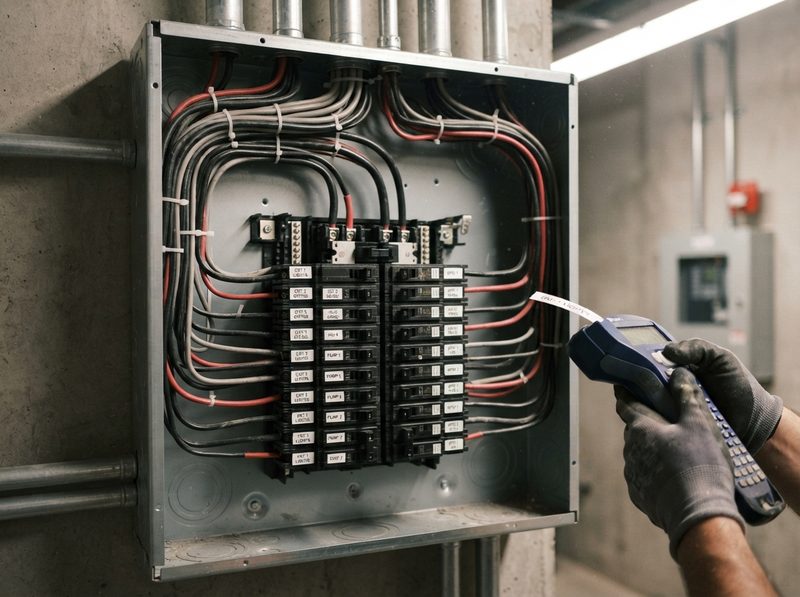
If you manage a commercial building, a simple preventive electrical maintenance schedule catches problems while they are still an inspection item, not an emergency call.
Why preventive maintenance pays for itself
Electrical failures in a commercial building rarely happen without warning. A loose connection heats up before it fails. A breaker degrades before it trips unexpectedly. A preventive maintenance schedule catches these signs while they are still an inspection item, not an emergency call and a tenant without power.
Annual items
Once a year, have a qualified electrician inspect main service equipment, switchgear and panels, test emergency lighting and exit signs for full duration, and check tightness of connections in main distribution equipment. Thermal imaging of panels and switchgear under load is worth doing annually, since it finds hot connections before they fail.
Quarterly items
Every quarter, test ground fault protection where installed, inspect exterior lighting and site lighting for damage or water intrusion, and visually check panels for signs of overheating, unusual smells or discoloration. These are quick checks that catch problems building up between the more thorough annual inspection.
Monthly and visual checks
Building staff can handle simple monthly checks without an electrician: confirming exit signs are illuminated, emergency lighting comes on when tested, and no panels have unusual noise, heat or smell. Anything unusual found during these checks should trigger a call to an electrician rather than being logged and left for the next scheduled visit.
Standby generator testing
If the building has a standby generator, it needs regular exercise under load, not just a start-up test with no load connected, along with fuel, battery and transfer switch checks. A generator that has not been tested under real load is an unknown quantity exactly when it is needed most.
Seasonal considerations
In a climate with cold winters and salt exposure near the coast, exterior electrical equipment works harder than the same equipment would inland. Check exterior panels, site lighting and any outdoor disconnects for moisture intrusion and corrosion each fall before winter sets in, and again in spring once the season's weather has passed. A connection that corrodes slowly over several winters can fail well before it would in a milder, drier climate.
When to call in a specialist
Building staff can manage the simple visual and functional checks, but panel work, thermal imaging, and anything involving opening electrical equipment should be done by a licensed electrician. If a monthly check turns up something unusual, a smell, a warm panel cover, a breaker that will not reset, treat it as a reason to call rather than a note to mention at the next scheduled visit.
Keeping records
Keep a written record of every inspection, test and repair, with dates and findings. This record is what an insurer or inspector will ask for after an incident, and it is also what shows a pattern developing in a piece of equipment before it fails outright.
Setting the schedule up once
The easiest way to keep a maintenance schedule running is to set it up as a standing calendar with named responsibilities: which items building staff check monthly, which items an electrician handles quarterly and annually, and who is notified when something is flagged. A schedule that exists only as an idea tends to slip once the building gets busy. A schedule with dates and names attached tends to actually happen.
Fitting the schedule to your building
A single-tenant office and a multi-tenant retail building do not need identical maintenance schedules. Adjust the frequency and scope of checks to match how the building is actually used, how much load the electrical system carries, and how much disruption a failure would cause tenants. A schedule copied wholesale from another building is a starting point, not a finished plan.
Talk to Puffin Power
Puffin Power provides preventive electrical maintenance and emergency service for commercial buildings across Atlantic Canada. Contact us to set up a maintenance schedule for your building, or call (709) 769-9713.
Published 2026-09-23 · About 3 minute read