
If a project budget needs to come down and the electrical scope is on the table, the difference between good value engineering and a bad one is whether the system still performs the same job afterward.
What value engineering actually is
Value engineering means reviewing a design to find lower-cost ways to meet the same performance requirement, not simply removing scope to hit a number. Done well, it protects the budget and the system. Done poorly, it becomes a list of cuts that shows up later as callbacks, capacity problems or code issues.
Good candidates for value engineering
Equipment manufacturer selection is often a fair target, since multiple manufacturers can meet the same specification at different price points. Conduit and wiring methods can sometimes be adjusted based on the specific building conditions. Panel and equipment layout can occasionally be simplified to reduce conduit runs and labour without changing capacity.
Items to leave alone
Service and panel capacity should not be reduced to save money on a building that will need more power later. Spare capacity for future tenant fit-up, EV charging or equipment additions is far cheaper to build in now than to add after the building is occupied. Life safety systems, emergency lighting, fire alarm interfaces and standby power for code-required loads are not the place to cut.
Distribution and equipment choices
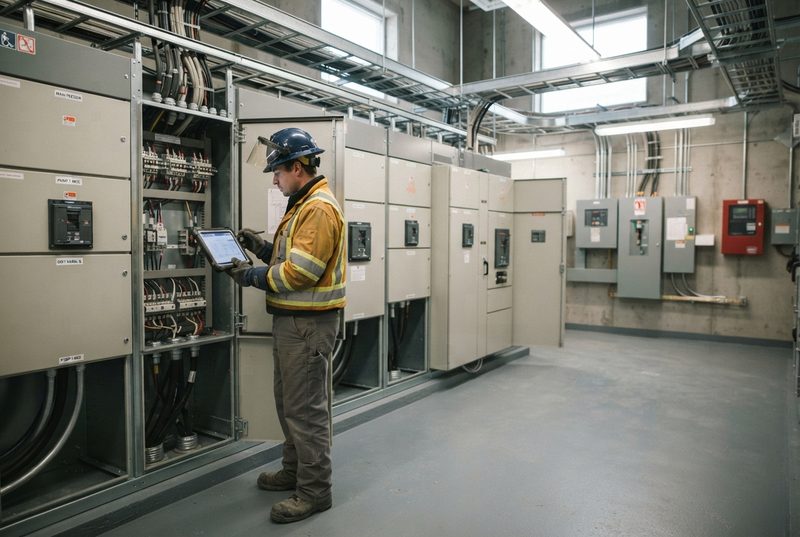
Compare switchgear and panel options through our low and high voltage work on total installed cost, not just unit price. A slightly more expensive panel that reduces conduit runs or fits the space better can be cheaper installed than a lower-priced unit that adds labour. This is where working with a contractor who prices the whole job, not just equipment, pays off.
Lighting and controls
Lighting is one of the more flexible line items. Fixture count, fixture type and control strategy can often be adjusted to meet code minimum illumination and controls requirements at a lower cost, without changing the number of circuits or the panel design behind them.
Timing matters
Value engineering works best early, while a design decision can still be changed on paper. Requested late, after equipment has been ordered or drawings issued for permit, the same review either costs more to implement or forces a rushed decision without time to check the tradeoffs properly. If a budget review is likely, build a checkpoint for it into the design schedule rather than waiting until pricing comes back higher than expected.
Documenting the decisions
Whatever is changed, write down what was changed and why, and keep it with the project record. A future owner, facility manager or contractor looking at the building years later should be able to tell that a decision was made deliberately, rather than wondering why a system was built to a lower specification than a similar building down the street.
Working through it with your contractor
The best value engineering happens as a conversation, not a mandate, and it fits naturally into a design-build process where the same team is pricing and building the work. Ask your electrical contractor which items on the list actually save money once labour and schedule are accounted for, and which just move cost into future maintenance or a future upgrade.
A short list to bring to the conversation
Before the meeting, list the items you suspect are negotiable and the items you consider fixed, based on what matters most to how the building will actually be used. Bringing this list to the conversation, rather than asking the contractor to guess at your priorities, focuses the review on the items most likely to produce real savings without touching what matters to you.
Talk to Puffin Power
If a project budget needs a hard look at the electrical scope, contact Puffin Power for a review before decisions get made that are expensive to undo later. Call (709) 769-9713 to set up a conversation.
Published 2026-09-23 · About 3 minute read