
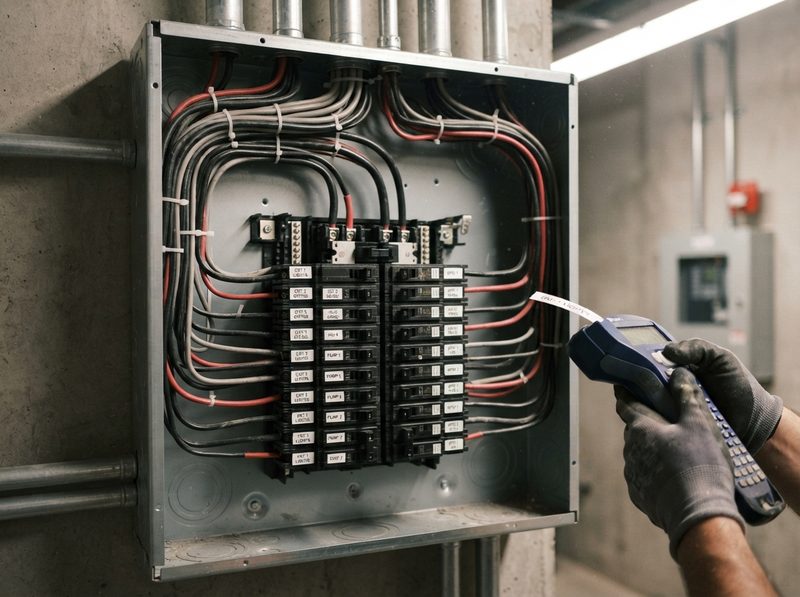
If you manage a commercial building, a thermal scan of your electrical panels finds developing problems long before they show up as a tripped breaker or a service call.
How thermal imaging works
A thermal imaging camera reads the surface temperature of electrical panels and switchgear while operating under normal load, showing a heat map of connections, breakers and bus bars. Equipment that is working correctly runs at a consistent, expected temperature. Equipment with a developing problem runs hotter at the specific point of failure, often well before it shows any other symptom.
What a hot spot usually means
A hot spot found during a scan is not itself the failure, it is the warning sign that comes before one. Electrical resistance at a connection or component generates heat, and that heat gets worse under load until the connection eventually fails, sometimes as a nuisance trip and sometimes as arcing or fire. Finding the hot spot early turns an emergency repair into a scheduled one.
Loose connections
The most common finding in a thermal scan is a loose or corroded connection, at a breaker terminal, a bus bar joint or a lug. Connections loosen over time from vibration, thermal cycling and age, and a loose connection generates heat that a visual inspection alone will not catch, since the wiring often looks completely normal from the outside.
Overloaded circuits
A scan can also reveal a circuit or breaker running consistently hotter than its neighbours because it is carrying more load than it was sized for, often the result of equipment added to a panel over time without checking capacity. This is worth investigating before adding further load to the same circuit or panel.
Failing breakers and components
Breakers and other components can develop internal resistance as they age, showing up as heat even with a properly tightened connection. This is a sign the component itself needs replacement, not just a retightening, and it is a useful distinction a thermal scan helps make before parts are ordered.
When to schedule a scan
Scan panels and switchgear under real, typical load conditions, not right after startup or during a slow period, since the point is to see how equipment behaves under the load it normally carries. An annual scan as part of a preventive maintenance schedule catches most developing problems before they become urgent.
Limitations of thermal imaging
A thermal scan reads surface temperature, and it can only find a problem that is generating heat at the moment of the scan, under the load present at that moment. A connection with an intermittent fault, or a circuit that was lightly loaded during the scan, may not show up even though a problem exists. This is why a scan is one part of a maintenance program rather than a replacement for panel covers being opened and connections checked periodically.
What happens after a finding
A hot spot found during a scan should be documented with the temperature reading and a photo, then repaired on a schedule that reflects how serious the finding is. A moderately warm connection can usually wait for a scheduled repair. A connection running significantly hotter than its surroundings should be addressed promptly, including through emergency service if it cannot wait.
Building it into a service visit
Thermal imaging is easiest to keep up with when it rides along with a service already on the calendar, such as an annual preventive maintenance visit, rather than being scheduled as its own separate call. Ask whether your maintenance provider includes it as part of that visit or offers it as an add-on, so it does not quietly drop off the schedule once a year turns into two.
Talk to Puffin Power
Puffin Power offers thermal imaging as part of commercial electrical maintenance. Contact us to schedule a scan, or call (709) 769-9713 for details.
Published 2026-09-23 · About 3 minute read