
Deciding between a portable generator and a permanently installed standby unit comes down to how often you expect to lose power, what you need to keep running, and how much you want to manage during an outage yourself.
What a portable generator actually gives you
A portable generator is exactly that: a unit you store, wheel or carry out, fuel, start and connect when you need it. It typically runs on gasoline or propane, and it connects to your electrical system either through extension cords to individual appliances or through a properly installed inlet and manual transfer switch that lets it feed a limited set of circuits.
The tradeoffs are straightforward. Portable units cost less upfront and can be used for other purposes, like a job site or camping. Against that, someone has to be home, sober, and willing to go outside in bad weather to set it up. It needs a supply of stored fuel on hand, which runs out. And it can only carry a limited set of circuits, chosen ahead of time.
What a standby generator gives you
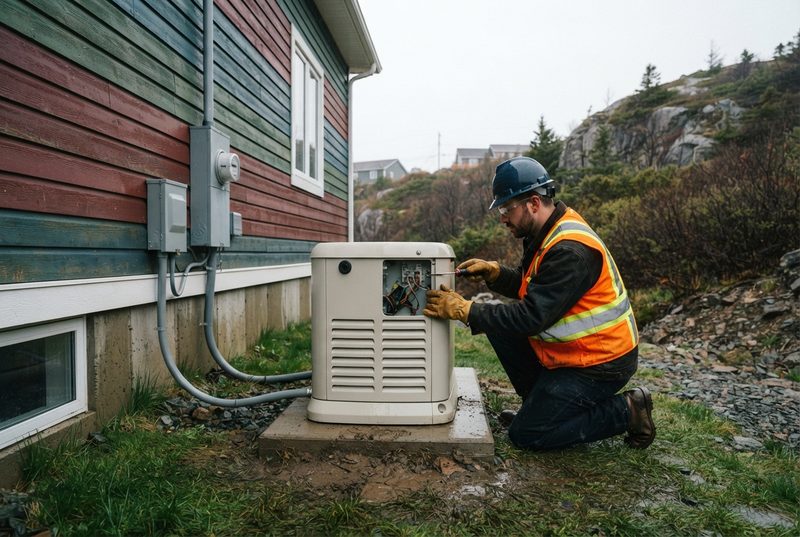
A standby generator is permanently installed outside the building, wired into an automatic transfer switch, and typically fuelled by propane, natural gas where available, or diesel. When utility power fails, it starts and takes over automatically, often within seconds, whether anyone is home or not.
This is the meaningful difference for a lot of households and businesses: a standby system does not require anyone to do anything. That matters for a rental property, a home where the owner travels, a business that needs refrigeration or security systems to stay live, or anyone who has been caught without power during a storm and does not want to repeat the experience.
Where portable makes sense
A portable generator can be the right call when:
- Outages in your area are infrequent and short.
- You mainly need to run a few specific things: a fridge, a sump pump, some lighting.
- Budget is the deciding factor and you are comfortable with the manual setup each time.
- You want a generator that can also serve other uses.
Where standby makes sense
A standby generator tends to make more sense when:
- You are away from the property often, or it is unoccupied at times.
- The building has systems that cannot tolerate a gap, such as sump pumps protecting a finished basement, medical equipment, or commercial refrigeration.
- You want the generator to start whether or not you are there to set it up.
- You are already planning renovation or new electrical work and want the generator designed in rather than added later.
A note on installation
A portable generator connected the wrong way, most commonly by plugging it directly into a wall outlet to backfeed the house, is dangerous. It can energize utility lines that crews assume are dead and put anyone working on them at risk, along with damaging your own equipment. Any generator, portable or standby, needs a proper transfer switch or interlock installed by a licensed electrician, sized and wired for your specific panel.
What installation actually involves
Neither option is entirely plug-and-play once you get past the smallest portable units. A portable generator still needs a properly installed inlet box and transfer switch or interlock to connect safely to household circuits, which is electrical work, not something to improvise with extension cords run through a window. A standby generator involves a concrete or composite pad, gas or fuel supply lines, an automatic transfer switch tied into the main panel, and coordination with the manufacturer's clearance requirements from windows, doors and property lines. Both also need to meet the requirements of the Canadian Electrical Code and pass inspection by your provincial electrical inspection authority. Skipping proper installation to save on cost is one of the more common ways a generator purchase turns into a bigger and more expensive problem than the outage it was meant to solve.
Talk to Puffin Power
If you are weighing a portable setup against a standby generator for a home, Puffin Power can talk through what fits your situation and quote the installation properly. Call (709) 769-9713 or visit /contact.html.
Published 2026-09-23 · About 3 minute read