
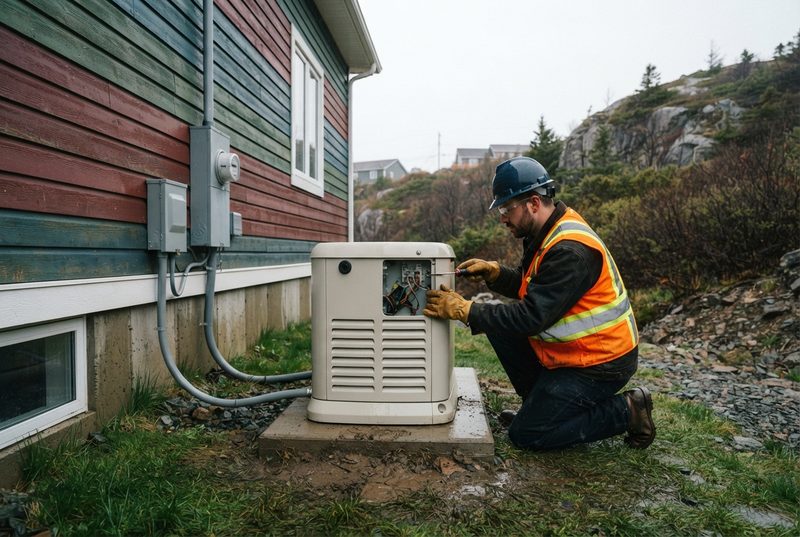
Homeowners considering a standby generator after one too many outages often start by asking which model to buy. The better starting question is what, exactly, needs to keep running when the power goes out, since that determines the size of generator that actually makes sense.
Whole-home versus essential circuits
There are two general approaches to sizing a home standby generator. A whole-home system is sized to run everything in the house at once, including electric heat, air conditioning and every appliance, and it costs more accordingly. An essential-circuits system is sized to cover a defined list of priorities, such as heat, the well or sump pump, the refrigerator, some lighting and a few receptacles, and it can be considerably smaller and less expensive. Most homeowners do not need whole-home coverage. Deciding which approach fits your household is the first real decision, before any conversation about kilowatt ratings.
Building the list of what matters
Walk through your home and identify what actually needs to keep running during an extended outage, then group it into categories.
- Life safety and comfort: heating system, sump or well pump, refrigerator and freezer.
- Communication: enough lighting and a way to charge phones and run a router if that matters to your household.
- Convenience: a few kitchen circuits, a home office, or a garage door opener.
- Larger loads: electric heat pumps, well pump motors and hot tubs all draw more than typical circuits, and starting loads, the surge when a motor first switches on, matter for sizing even more than running loads.
An electrician can measure or estimate the actual load of your priority list rather than relying on rough guesses, which is where sizing calculations go wrong most often.
Fuel type affects sizing and installation
Standby generators commonly run on propane or natural gas, where available, with diesel more common for larger commercial systems than typical homes. Fuel availability at your property, whether natural gas service reaches your home or you would need a propane tank, affects both what generator options are realistic and how the installation is planned. This is worth settling early, since it can affect where the unit is sited on your property.
The transfer switch is not optional
A standby generator connects to your home's electrical system through an automatic transfer switch, which safely isolates your home from the utility grid while the generator is running and switches back automatically when utility power returns. This is a safety requirement, not an optional add-on, since a generator connected without a proper transfer switch can feed power back into utility lines and create a serious hazard for utility workers. Any legitimate generator installation includes this as a core part of the work.
Getting the sizing right the first time
- List the circuits or loads you actually want covered, being specific rather than assuming "everything important."
- Have an electrician calculate the running and starting loads for that list, including anything with a motor.
- Choose whole-home or essential-circuits coverage based on that calculation, not on the largest unit a supplier happens to stock.
- Confirm fuel type and availability before finalizing a model.
- Include the transfer switch and any panel work in the same project scope, not as a separate afterthought.
Undersizing means the generator cannot start or sustain the loads you actually need during an outage. Oversizing means paying for capacity, fuel consumption and installation cost you will rarely use. Getting an accurate load calculation up front avoids both.
Revisit sizing if your home changes
A generator sized correctly today may not fit a home that later adds a heat pump, an EV charger, or a significant addition. Any of these changes the household's total load in ways that can push an essential-circuits system past what it was designed to cover, or make a whole-home system worth reconsidering if it was previously out of reach. When planning a major electrical addition to a home that already has a standby generator, mention the generator to your electrician so the new load and the existing backup system are considered together, rather than as two unrelated projects.
Talk to Puffin Power
Puffin Power, an authorized Generac dealer, sizes and installs standby generators for homes across Newfoundland and Labrador, starting with an accurate load assessment. Contact us to get started, or see our residential services.
Published 2026-09-23 · About 3 minute read